
+1 (312) 555-0144Order by SKU

About CMG · Engagement

Where CMG shows up

Events, education, and community — regional clinical meetings, workshops in our fabrication lab, mobility days on the lakefront, and the notes we bring back from all of it.

Follow CMG

Field notes

Short dispatches from the events, labs, and supplier floors where we spend our time. No subscription, no pop-ups — just the notebook.

Community

Community: Mobility Day on the Lakefront
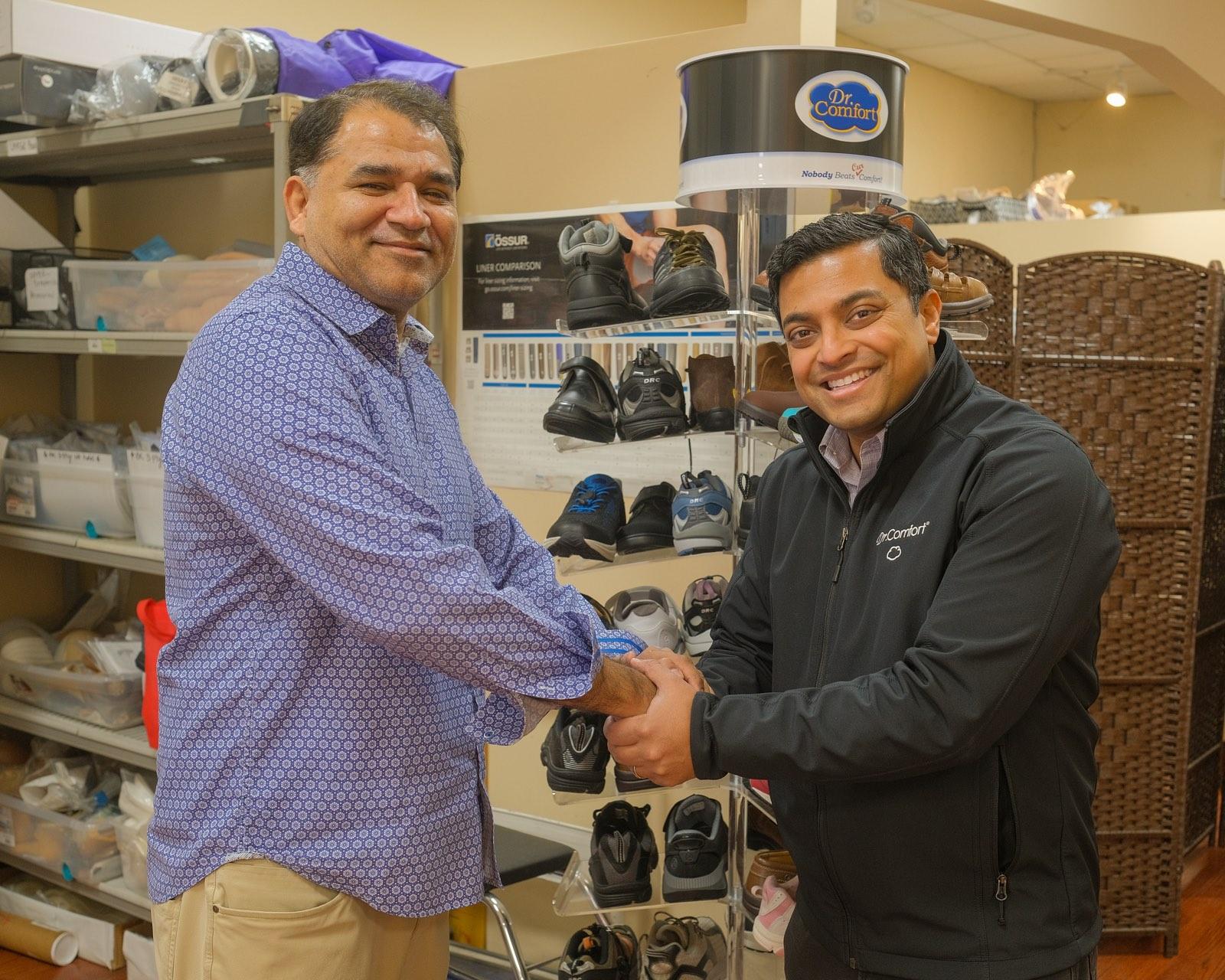
Two colleagues shaking hands beside a therapeutic footwear display

On a bright Saturday in June, CMG joined three Chicago-area practices and two amputee support groups for Mobility Day on the lakefront trail. The format was simple: adaptive cycling and walking clinics in the morning, free prosthesis and orthosis check-ups under the tents through the afternoon, and a cookout that ran until the volunteers gave out before the attendees did.

The check-up tent was the quiet heart of the event. Clinicians tightened pyramids, swapped worn sleeves, and caught two sockets that needed real follow-up — the kind of small interventions that keep little problems from becoming skin breakdown. Our team's job was logistics and parts: we stocked the tent with consumables, socks, and sleeves from the warehouse so that no repair waited on an order.

We came away convinced this should be a fixture, not a one-off. Community events like this close the loop between the products on our shelves and the people who actually wear them — a loop that a B2B company can forget if it isn't careful. We are already working with the organizers on a date for 2027, and if your practice wants tent space, we will save you one.

Community

Field Notes: What We Heard at the Spring Clinical Meetings

Our clinical team spent much of the spring on the road — two regional meetings, a fabrication symposium, and more hallway conversations than we could count. Three themes followed us from session to session. The first was scan fidelity: practices have broadly adopted 3D scanning, but the conversation has matured from 'should we scan' to 'how do we know the scan is good enough to fabricate from.' The labs that publish scan-acceptance criteria are earning trust, and we think that transparency becomes table stakes within a year.

The second theme was documentation fatigue. Clinicians are spending more hours justifying component choices than fitting them, and the sessions on outcome measures were standing-room only — not out of academic interest, but because a clean baseline measure is the fastest way to shorten a payer conversation. It is a big part of why we built our outcomes toolkit into the clinical services program.

The third was the energy in pediatrics. Between dynamic bracing, early-intervention referral pathways, and family-centered fitting models, the pediatric sessions had a momentum that the rest of the field should borrow. We left with a notebook full of ideas and a few new friendships with practices across the Midwest. If we missed you this spring, find us in October at the Great Lakes summit — booth 214.

Clinical

Inside the Lab: A Tuesday in West Fulton Market

By 7:30 on a Tuesday morning, the ovens in our West Fulton Market lab are already at temperature. The board shows six diagnostic sockets due out by Thursday, two carbon AFO layups in vacuum, and a custom TLSO waiting on a clinician's markup call. Our fabrication lead walks the room the way a chef walks a line — checking plastic temperatures, reading fiber layups against their schedules, flagging a positive model whose distal end needs another pass before it earns a pull.

The part visitors find surprising is how much of the work is conversation. Before anything gets formed, a technician has usually traded two or three messages with the prescribing clinician: confirming trim lines, querying a measurement that doesn't agree with the scan, suggesting a stiffer layup for a patient whose chart mentions a return to farm work. The bench skill matters enormously, but the questions matter more. A beautifully made device built to a misread specification is still a remake.

We share all this because central fabrication can feel like a black box, and it shouldn't. If you send us work, you are welcome to visit the lab that builds it — we host practice teams most months, and the workshop calendar on our events page is the easiest way in. Bring questions. The technicians like the hard ones.

Company News

Supplier Notebook: Watching Liners Get Made

Part of our sourcing discipline at CMG is simple: we visit the floors where our catalog is made. This spring two of our team flew south to spend two days with one of our interface partners, walking the line from raw polymer to sealed package. It is one thing to read a durometer specification on a data sheet; it is another to watch a technician pull a sample from every batch and test it before the batch ships.

What stayed with us was the obsession with consistency. A liner is a wear item — a patient who loves their third liner expects their fourth to feel identical, and any drift in gel formulation breaks that trust. The quality lab kept reference samples going back years, and the production team could trace any liner on the shelf to its batch, its operator, and its test results within minutes. That traceability is invisible to the clinic, which is exactly the point.

These visits shape the roster you see on our suppliers page. Specifications and pricing matter, but the suppliers we feature are the ones whose floors we have walked and whose quality habits we would stake our own name on. More notebook entries to come as the visit calendar fills in.